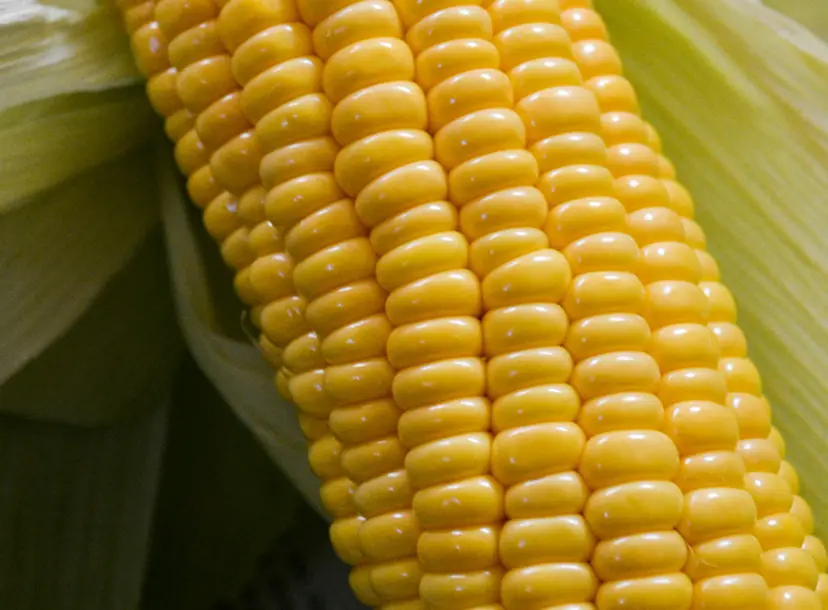
Each spring, Sikhs around the world celebrate Vaisakhi, a festival that marks both the harvest season in Punjab and commemorates the founding of the Khalsa in 1699, a defining moment in Sikh history. It is a celebration of growth, renewal, and abundance. During the festival, traditional food such as Makki ki Roti is eaten, made from a common symbol of harvest: corn, an everyday crop that, on closer inspection, reveals a mathematical marvel.
If you look carefully at an ear of corn, you’ll notice the kernels don’t line up randomly, but they spiral upward in interwoven patterns. Count the spirals in one direction and then the other, and you’ll often find pairs of numbers like 8 and 13, or 13 and 21. These numbers belong to the Fibonacci sequence, a mathematical pattern introduced to Europe by Leonardo of Pisa in the 13th century.
The Fibonacci sequence
The Fibonacci sequence is a mathematical series in which each number is the sum of the two preceding numbers, starting from 0 and 1. The sequence is defined by the recurrence relation F(n) = F(n-1) + F(n-2), with starting values F(0) = 0 and F(1) = 1. This gives the sequence 0, 1, 1, 2, 3, 5, 8, 13, 21, 34… which continues infinitely.
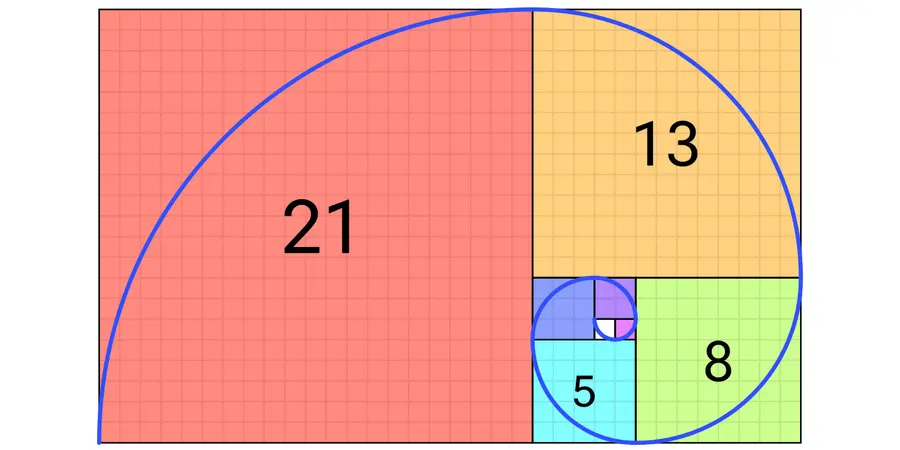
The Fibonacci sequence can be used to construct a Fibonacci spiral – this is a spiral made up of quarter-circle arcs through squares for which the lengths of the sides correspond to Fibonacci numbers. Starting with two small squares, with a quarter circle drawn through each, another square is added besides the first two, whose sides have a length twice that of the first square. The next square has sides with a length three times that of the first square, then five times, then eight times and so on. With arcs drawn through each square, a spiral emerges.
The Golden Ratio
The ratio between one number and the next in the Fibonacci sequence tends towards the Golden Ratio. The Golden Ratio, written using the symbol Φ (phi), is the number for which 1/Φ + 1 = Φ. If you divide a line into two parts such that the ratio of the smaller part to the larger part is the same as the ratio of the larger part to the whole line, it will be in the Golden ratio. Φ is equal to (√5+1)/2, which is approximately 1.618.
The Fibonacci sequence and the Golden Ratio were known to ancient mathematicians. The Fibonacci sequence is recorded in the works of Pingala, an Indian writer, as early as 200 BC, and the Golden Ratio was defined by the Greek mathematician Euclid in 300 BC. However, it was Leonardo of Pisa (later known as Fibonacci – ‘son of Bonacci’) who introduced the concept into medieval Europe, in his Liber Abaci (‘Book of Calculation’) of 1202, in which he used the sequence to model rabbit populations.
The Fibonacci sequence in nature
In his manuscript, Leonardo of Pisa suggested a model for populations of rabbits, in which each pair of rabbits produces one pair of baby rabbits in a given time period, and the baby rabbits take the same time to mature to be able to produce their own offspring. The model assumes rabbits live forever, and only produce one pair of babies at a time. It also doesn’t account for rabbits changing partners or populations migrating, so it’s a very simplified model, but it results in the Fibonacci sequence.
Fibonacci numbers occur in many places elsewhere in nature. Counting the number of spirals of seeds on a sunflower head will result in a Fibonacci number. Counting the spirals pointing left and pointing right will give two consecutive Fibonacci numbers. This is because the spacing of the seeds is optimal when it’s least likely to overlap with itself. The Golden ratio is useful in making the gap between seeds least likely to be a fraction of a whole turn - if the seeds were placed ¼ turn apart, every fourth seed would overlap, but with seeds 1/Φ of a turn apart (the Golden angle) the seeds will spiral outwards, and the number of turns will be a Fibonacci number.
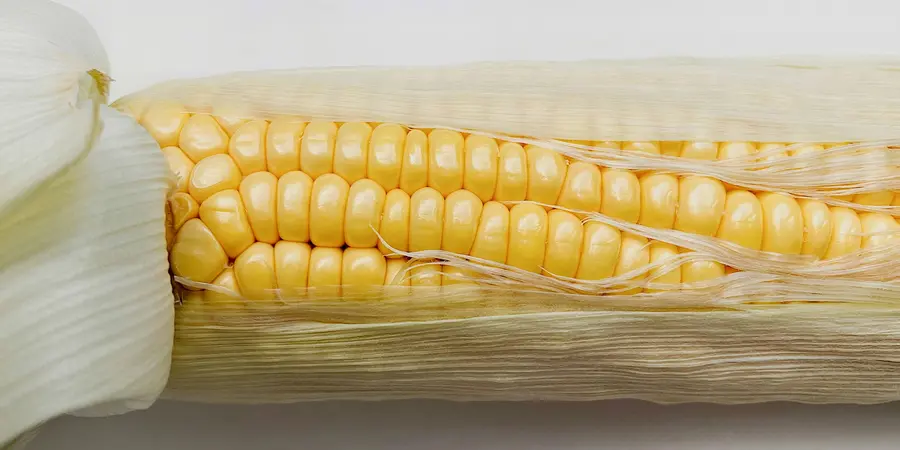
Likewise, counting the number of spirals on a pinecone, romesco broccoli, pineapple or a head of corn will result in a Fibonacci number.
Of course, every plant and animal is different, and natural variation means this sometimes doesn’t work. The growth of plants can be interrupted or changed by physical interference, random mutations, and weather conditions. But Fibonacci numbers are found so frequently in nature that there is a journal, the Fibonacci Quarterly, dedicated to new discoveries connected to Fibonacci numbers! They have also been found to have useful applications in areas such as divisibility algorithms, project planning methods, search algorithms, and generating random numbers.
The harmony of tradition and mathematics
The celebration of Vaisakhi illustrates the profound connection between cultural traditions and the scientific principles that govern our world. As we honour the agricultural abundance of this festival, we also recognize the mathematical elegance that underlies the growth patterns in nature, such as those exemplified by the Fibonacci sequence. This intersection not only enriches our understanding of the natural world but also highlights how ancient wisdom and modern science can coexist and complement each other.
By embracing both the cultural significance of Vaisakhi and the mathematical wonders that describe natural phenomena, we foster a deeper appreciation for the intricate tapestry of life. This synergy reminds us that the stories we celebrate are often intertwined with the laws of nature, revealing a world where tradition and science walk hand in hand, guiding us toward a more holistic understanding of growth, renewal, and abundance.
Dive in deeper with Masterclasses
Ri Masterclasses are free extracurricular workshops in maths and computer science. They nurture students’ curiosity and inspire them to continue STEM engagement into the future.
You can find out more about our in-person workshops here, or explore this topic further from home with our off-the-shelf Masterclasses:
The Royal Institution is an independent charity. We are very grateful to the supporters of our Masterclasses programme: Bain & Company, Causeway Technologies, The Faraday Institution and the Worshipful Company of Actuaries Charity.