When one says “space mission”, the first thought for most will be Neil Armstrong’s legendary first human steps on the Moon, stepping off the Apollo 11 Landing Module Eagle—stamped into pop culture harder than the Moon Boot footprint.
And while Apollo 11 is probably the most iconic mission, the history of space exploration is packed with many more world-changing “firsts” and incredible moments.
With our noses turned up to the sky as we wait for the 2025 CHRISTMAS LECTURES, supported by CGI, we’re taking a warp-speed detour through five remarkable missions that deserve their own moment in the spotlight.
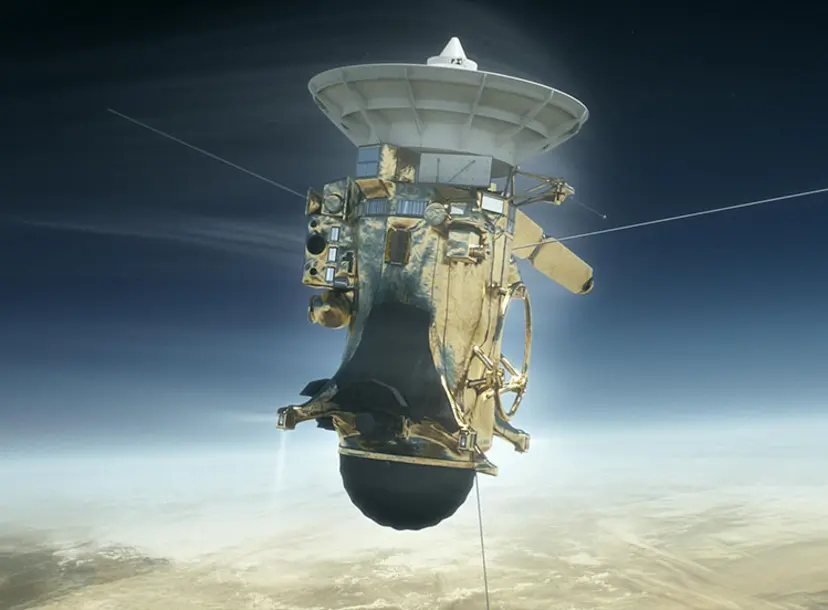
COBE : detecting traces of the early Universe
This NASA satellite revolutionised our understanding of the Big Bang theory.
In the 1960s, scientists discovered that microwave radiation filled all of space in the observable Universe. This cosmic microwave background (CMB) appeared to be leftover thermal energy from the Universe's early, hot, dense state, also known as the Big Bang.
In order to test the theory, cosmologists needed to know whether the radiation was the same in every direction, or whether it had spatial variations.
In the early '90s, COBE (COsmic Background Explorer) took measurements showing “wrinkles” in the radiation field. These variations meant the Universe was denser in places, which cosmological theory tells us would have led to gravitational separation and the formation of galaxies.
COBE confirmed that the spectrum of radiation precisely matched what had been predicted by the Big Bang theory.
Deep Impact: high-speed collision with a comet
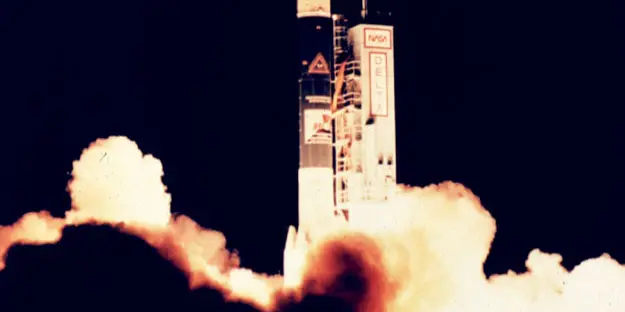
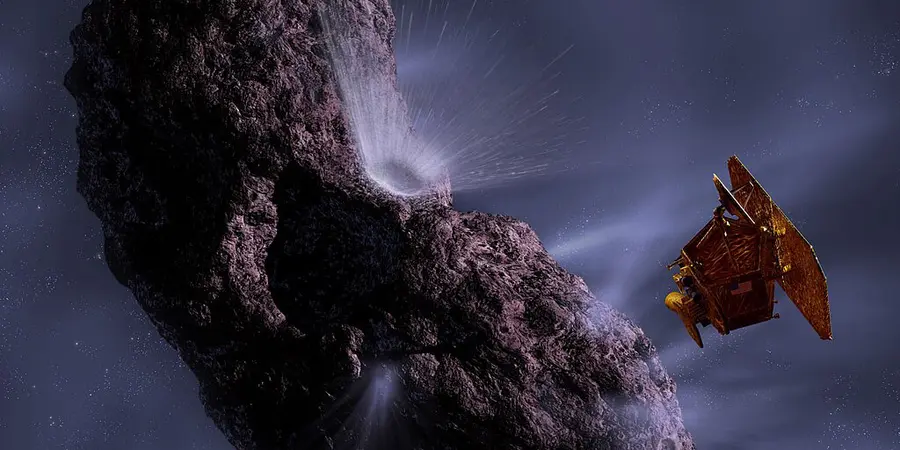
In 2005, NASA launched a 370kg spacecraft into a comet to study beneath its surface, in a spectacular manoeuvre that would make a Hollywood blockbuster film jealous.
After impact at 37,000 km/h, the resulting crater and debris were analysed in a variety of ways, including instruments in the flyby spacecraft, and through observations using telescopes in space (like Hubble) and on Earth.
The mission found evidence of water ice, carbon-rich compounds and organic molecules, supporting the idea that comets may have played a role in delivering these to early Earth.
Cassini-Huygens: the first sample from an extraterrestrial ocean
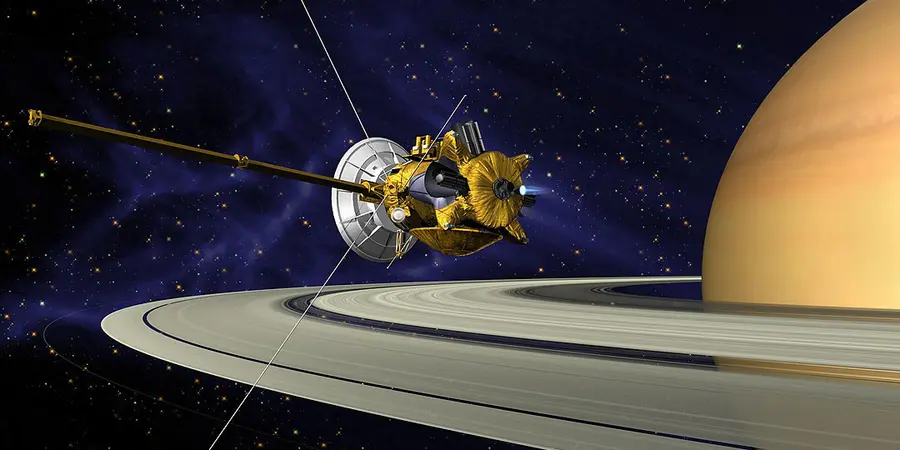
Launched in 1997, the mission took a spectacular route flying by Venus and Jupiter, before reaching Saturn’s orbit in 2004.
The space probe flew through the jets of vapour and ice particles erupting from Saturn’s moon Enceladus, finding evidence of liquid water, salts, minerals and molecular hydrogen—suggesting conditions compatible with microbial life similar to Earth’s.
NASA's Planetary Science Division Director, Jim Green, said the mission “revolutionised […] our understanding of where life might be found in the Solar System”.
As the mission wrapped up, Michele Dougherty (now Astronomer Royal) gave an Ri Talk on its beginnings and unexpected findings. You can watch it here.
Gravity probe B: a pure test of fundamental physics
Einstein’s famous general theory of relativity states that gravity is a manifestation of the curvature of spacetime caused by mass and energy, rather than a force.
This 2004 satellite-based experiment set out to test two of the theory’s key predictions:
- The geodetic effect (the curvature of spacetime caused by Earth’s mass)
- Frame-Dragging (the effect of Earth’s rotation dragging spacetime around with it).
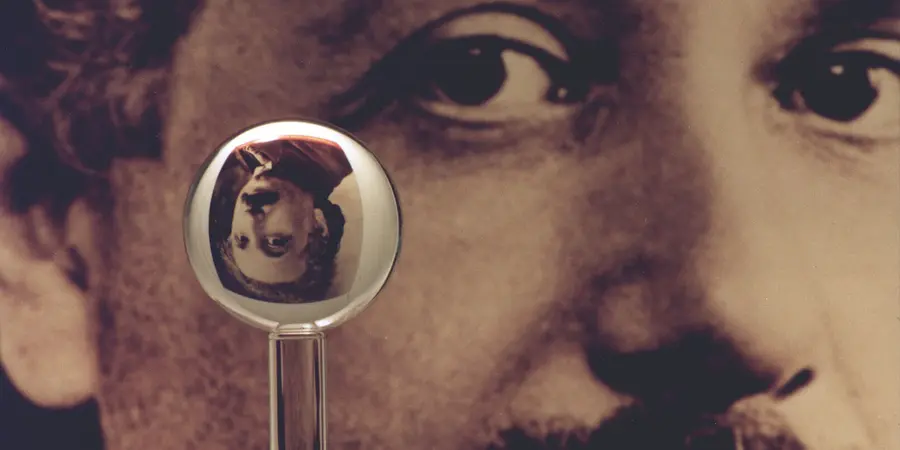
The mission used four ping pong ball-sized gyroscopes, polished to within 40 atomic layers of perfection. Their spin direction was then read by detecting tiny magnetic fields. Everything was kept supercooled by superfluid helium contained in a 650-litre Dewar flask—which was originally invented here at the Royal Institution by Scottish physicist James Dewar (you’re welcome, NASA!).
GP-B provided direct experimental evidence for both the curvature of spacetime and the dragging of spacetime by rotating bodies, matching Einstein’s predictions in his general theory of relativity.
AMSAT-OSCAR-7 : the satellite that just wouldn’t quit
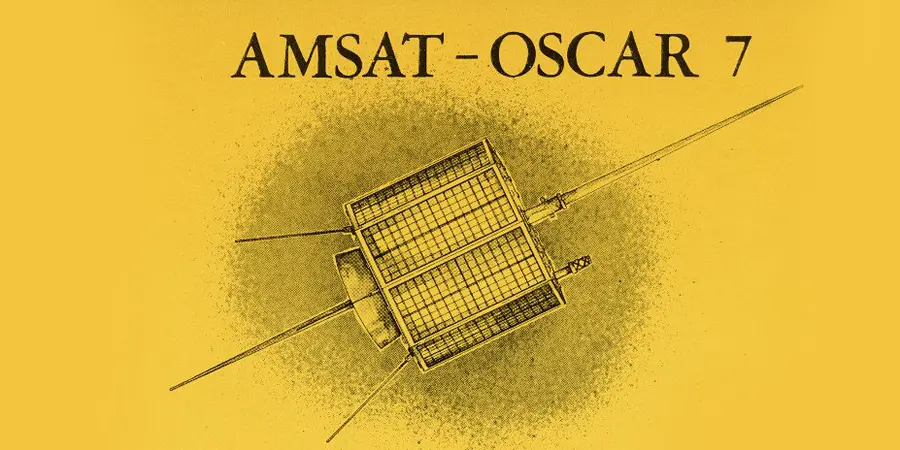
This amateur radio satellite went undetected by the public for 21 years, until it was suddenly heard again. It’s still in working order today, making it the world’s oldest operational satellite.
Following a battery failure in 1981, AMSAT-OSCAR-7 (AO-7) was presumed “dead”. When it was heard again in 2002, we learned that it had been working off its solar panels the whole time—powering on while in orbital daylight, and shutting down under the Earth’s shadow.
And during those two decades, it still wasn’t completely idle: it was secretly used by anticommunist activists during martial law in Poland. At a time when most forms of communication (like phones and ham radios) were controlled by the regime, satellite link required highly directional antennas that were too difficult for the government to track.
Not bad for a satellite old enough to predate the Star Wars films.
Explore the mysteries written in the stars
The 2025 Christmas Lectures, supported by CGI, will see space scientist Dame Dr Maggie Aderin take us to the edge of our universe.
For the 200th anniversary of the series, Maggie will take us on a jaw-dropping tour of our Solar System and beyond, looking for scientific evidence of extra-terrestrial life.
Tune in to BBC Four and iPlayer 28, 29 and 30 December at 7.00pm