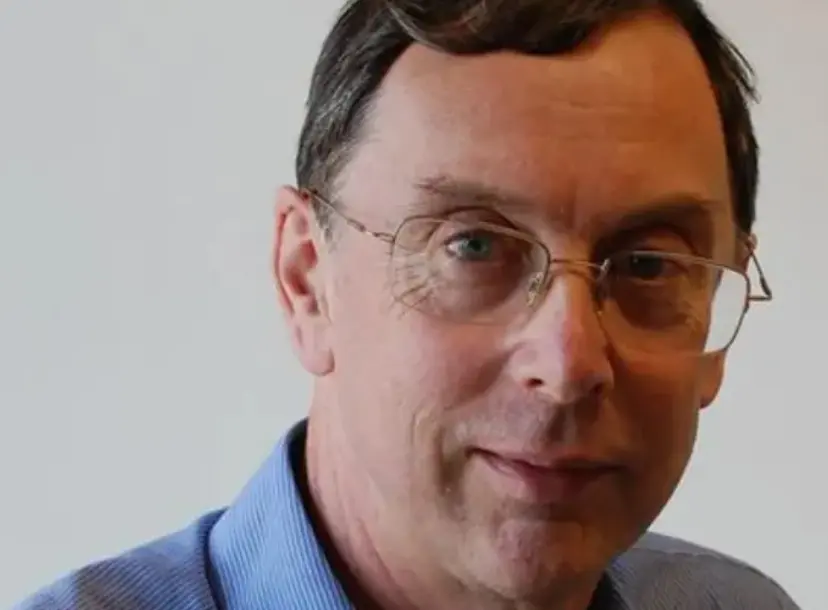
We are deeply saddened to hear about the death of Sir Roland Jackson who was very well-regarded member, Fellow and Trustee of the Royal Institution (Ri) and a pivotal figure in the fields of science communication, science education and history of science.
Royal Institution as a crucible for public engagement with science
Roland was an elected Trustee of the Royal Institution from April 2019 to May 2022, a Member and a visiting Fellow from 2013 until his death. Roland worked hard to support the Ri, especially during challenging periods, and was always sincere, principled and professional in his role as a Trustee. His contributions have helped the Ri to thrive again.
Roland was passionate that the Ri should draw on its history in order to shape the future, saying once that:
“For me, the Ri is one of the crucibles of scientific research and of public engagement with science. I have worked with the Ri over many years, especially from my times with the Science Museum and the British Science Association. Its history still lives, in the building and in its archive. But it always looks forward, and it is a pleasure to be involved in the next stage of its development.”
Rediscovering John Tyndall, the forgotten co-founder of climate science
Roland actively engaged with the Royal Institution’s heritage over the last 15 years, becoming a strong supporter of the collections and a voice of encouragement in sharing the Ri’s unique and extensive history.
Through interest in the research of Victorian scientist John Tyndall, Roland became an active Research Fellow in the Heritage and Collections department of the Ri, using the collections extensively in the development of his biography of Tyndall (published in 2018) and in his participation in the international research project concentrating on publishing Tyndall’s correspondence (https://tyndallproject.com/). His dedication to this research helped to uncover many unidentified letters within the Ri’s own collection as well as scattered fragments throughout public and private archives around the world.
Roland actively shared his enthusiasm and knowledge of science history with the heritage team and with the public and will be a very much missed member of the Heritage and Collections team.
Science for all
Sir (William) Roland Jackson believed strongly that science is for everyone – and that young people in particular should be given the opportunity to develop an interest in science. His own career had begun in science: he was awarded a BA Hons in Biochemistry at the University of Oxford (St Peter’s College) in 1976. He went on to complete a D. Phil in Molecular Immunology and a PGCE at the University of Oxford.
His passion for science education came from his first-hand experience of nine years as a science teacher in Suffolk and then Somerset, rising to become Head of Science at Backwell Comprehensive School. From teaching, he spent four years as an education advisor for the international chemicals firm ICI before joining the Science Museum as Head of Learning in 1993. After almost ten years at the Science Museum, he became Chief Executive at the British Science Association, an organisation he led until 2013. During his time at the British Science Association, Roland oversaw a significant expansion in the charity’s support for schools and led, with Young Engineers and EngineeringUK, the combination of several schemes to form a national schools science and engineering competition and fair, now the Big Bang.
Roland played an active role across the wider science engagement sector too, including in the founding of the Science Council, where he was a board member from 2003 to 2008, and in the formation of a UK-based branch of the European network for science and discovery centres, then called ECSITE-UK. In 2009, he was asked by the then-Minister for Science and Innovation to chair an ‘Expert Group’ on the topic of ‘Science for All’ and led the production of a report and action plan which recommended that research organisations take action to value, recognise and support public engagement with science – a recommendation that encouraged the growth of public engagement strategies, specialists and funding across the higher education sector.
Around the same time, Roland became increasingly interested in ‘dialogue’ as a method for understanding public views of emerging technologies and was invited to Chair the government’s Sciencewise programme from 2012, and to join the governing body of the Nuffield Council on Bioethics.
Roland died suddenly on 10 January 2026 while climbing a snow gully on Hellvelyn. Mountain-climbing was one of his greatest passions; as Roland said of Tyndall, “mountains held a lure he could not resist”.
We are grateful to Roland for his dedication and contributions, he will be very fondly remembered by all of us fortunate to work with him, and we offer our deepest condolences to Roland’s family and friends, especially his wife Nicola.
Published works
Scientific Advice to the Nineteenth-Century British State (University of Pittsburgh Press, 2023)
Correspondence of John Tyndall, General Editor, with Bernard Lightman and Michael Reidy (University of Pittsburgh Press)
Correspondence of John Tyndall, volume 7, co-edited with Diarmid A. Finnegan, Nanna Katrine and Luders Kaalund (University of Pittsburgh Press)
Correspondence of John Tyndall, volume 10, co-edited with Michael D. Barton and Ken Corbett (University of Pittsburgh Press)
The Ascent of John Tyndall (Oxford University Press, 2018)
The Poetry of John Tyndall, co-authored with Nicola Jackson and Daniel Brown (UCL Press, 2020)